> ## Documentation Index
> Fetch the complete documentation index at: https://docs.memeperfect.io/llms.txt
> Use this file to discover all available pages before exploring further.
# Core Concepts: What is a Strategy?
> Understand how Triggers and Rules produce alerts.
A Strategy is the logic that tells MemePerfect what to watch and what to ignore. It is the core unit of automation in the product.
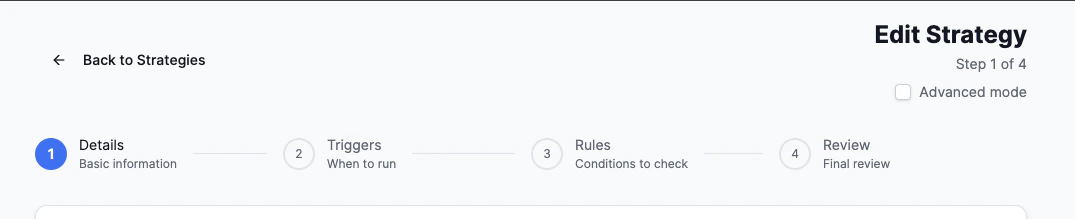
Every Strategy is built from two parts: **Triggers** and **Rules**.
`Trigger (when to evaluate) + Rules (what must be true) = Alert`
 ## Trigger
A **Trigger** tells the system when to start evaluating a token.
Examples:
* A new token is created.
* A tracked author mentions a token.
* A followed developer launches a token.
## Rules
**Rules** tell the system what must be true once evaluation starts. They check security, market data, social presence, and AI-based signals.
If the token meets your configured conditions, the Strategy sends an alert.
## Why this matters
Most strategy problems come from one of two places:
* the wrong **Trigger**, which means evaluation starts at the wrong moment
* the wrong **Rules**, which means the filter is too loose or too strict
Learn the difference between the two parts of a Strategy.
Learn how Rules are organized and evaluated.
Keep this model in mind while reading the rest of the docs. Almost every feature builds on it.
## Trigger
A **Trigger** tells the system when to start evaluating a token.
Examples:
* A new token is created.
* A tracked author mentions a token.
* A followed developer launches a token.
## Rules
**Rules** tell the system what must be true once evaluation starts. They check security, market data, social presence, and AI-based signals.
If the token meets your configured conditions, the Strategy sends an alert.
## Why this matters
Most strategy problems come from one of two places:
* the wrong **Trigger**, which means evaluation starts at the wrong moment
* the wrong **Rules**, which means the filter is too loose or too strict
Learn the difference between the two parts of a Strategy.
Learn how Rules are organized and evaluated.
Keep this model in mind while reading the rest of the docs. Almost every feature builds on it.