
Triggers: the “when”
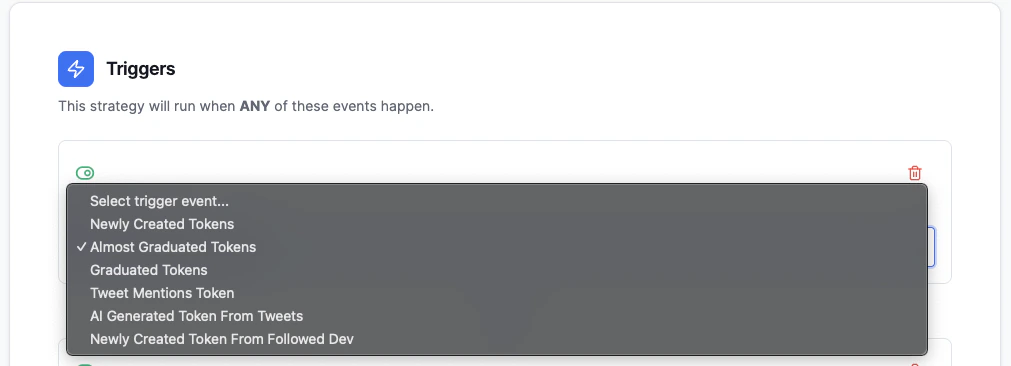
A Trigger is the event that says: wake up and analyze now. Your strategy runs only when an event matches one of your triggers.- Event-driven:
- Newly created tokens: A New Token is Created
- Almost graduated tokens: Tokens has gone past the newly created stage and heading for graduation
- Graduated tokens: Token has finally graduated
- Tweet mentions token: A Tweet Mentions a Token either by CA or token name
- Tweet metadata match: A new token launch is matched against stored tweet signals from your selected handles using metadata such as name, symbol, description, and linked URLs
- Newly created token from followed dev: When a developer you follow launches a new token
Rules: The “What”
Rules are the conditions that must be true about the token when analysis runs. Once a trigger fires, rules evaluate the token’s properties, on-chain data, and social signals to determine if it matches your criteria. Rules are evaluated in two stages: Dealbreakers first (non-negotiable safety checks), then Rule Groups (flexible combinations with AND/OR logic). A token must pass all Dealbreakers and satisfy your Rule Groups to generate an alert. Rules are organized into four categories:- Security: Protect against scams and risky tokens (honeypots, rug pulls, LP locking, etc.)
- Market: Evaluate trading metrics (liquidity, volume, market cap, holder distribution, etc.)
- Socials: Verify community presence (website, Telegram, Twitter, DEX listings, etc.)
- AI: Machine learning assessments of token legitimacy (coming soon)